

For thousands of years, people have gone to extreme lengths to replace missing teeth. Not for vanity—but for function, health, and quality of life.
That hasn’t changed. What has changed is the number of options available—and the consequences of choosing a temporary fix when a permanent solution exists.
The solution you choose will determine whether you’re solving the problem once—or managing it for years. Here is what you need to know to make sure you get a permanent fix.
Modern Tooth Replacement Options Explained
People once accepted painful, unreliable tooth replacements because they had no choice. Today, choosing the wrong option is no longer unavoidable—it’s optional.
If you’re missing multiple teeth—or all of them—there are three main tooth replacement options commonly discussed today.
1. Traditional Dentures
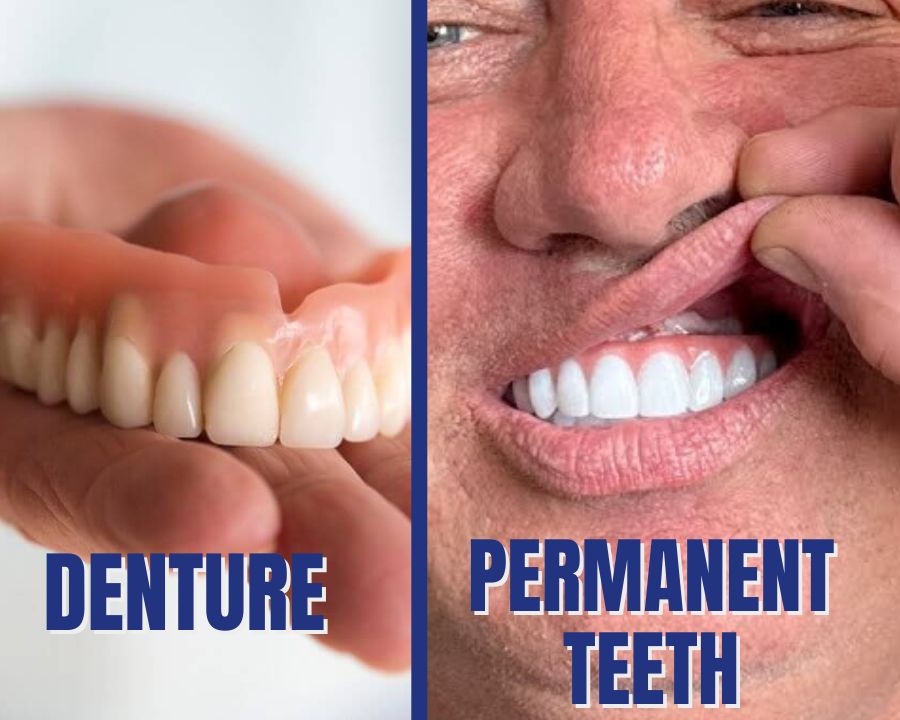
Dentures rest on the gums and replace the visible portion of missing teeth. While they remain a common solution, they come with significant drawbacks.
Over time, dentures can contribute to bone loss because they don’t stimulate the jaw the way natural teeth do. They can slip, require adhesives, cause sore spots, and often need relining or replacement as the mouth changes.
For many patients, dentures restore appearance—but not confidence or comfort. Many patients report uncontrolled gagging, shifting and clicking at inconvenient times and even in some cases unexpected choking on a shifted denture.
*Actual NUVIA patient(s) who may have been compensated for sharing their story. Not all those who come in for a consultation are eligible for this treatment. Results may vary in individual cases.
2. Dentures Supported by Implants
Some dentures are held in place using a limited number of implants for added stability. This can be a step up compared to traditional dentures, but the denture itself is still removable and often made from acrylic materials which are known to break, crack, and need to be replaced over time (not to mention easily they discolor)
While this option can be an improvement over standard dentures, it is still considered a temporary solution rather than a permanent one because it isn’t designed to last.
3. Full Mouth Dental Implants With Permanent Teeth
Full mouth dental implants replace missing teeth by securing a full arch of prosthetic teeth to dental implants placed in the jawbone. The implants act like natural tooth roots, helping preserve bone and create a stable foundation for your new set of teeth.
With advanced planning and modern technology used at Nuvia, patients can receive their final, permanent teeth within 24 hours, allowing them to heal with their completed smile instead of temporary dentures.
Typically, providers doing full mouth dental implants will use a method called “Teeth in a Day”®. This is where a patient wakes up from the implant procedure with a set of temporary teeth (basically a denture attached to your implants sometimes called “healing teeth”). These are not customized, often described as bulky, and can be prone to breaking. And the bad news is that patients may wear these teeth for up to 10+ months.
This is why it is so unique that at Nuvia, patients totally skip the temporary, healing teeth step and instead get their permanent set of teeth 24 hours after the procedure.
For patients seeking a fixed, long-term solution, full mouth dental implants is the tooth replacement option that most closely replicates natural teeth in function, appearance, and stability.
Why Dental Implants Are Different
Dentures sit on top of the gums. Dental implants integrate with the bone.
That distinction matters.
When teeth are missing, the jawbone begins to shrink. Dentures can accelerate this process. Implants, on the other hand, help preserve bone by providing the stimulation the jaw needs to stay healthy.
So not only are dental implants not just another tooth replacement option—they’re a way to stop the cycle of bone loss, instability, and repeated adjustments. They’re an investment in your future health and may even save you money otherwise spent on ongoing dental procedures in the long run.
[Short Video clip on dentures vs dental implants or Duncan talking about how much treatment would have cost without implants]
Choosing the Right Tooth Replacement Option
The best tooth replacement option for you ultimately depends on several factors, including bone health, medical history, and long-term goals. What matters most is understanding the difference between replacing teeth temporarily and replacing them permanently.
People once accepted uncomfortable, unreliable solutions because there was no alternative. Today, there is.
Take the Next Step
If you’re exploring tooth replacement options, the most important question isn’t what used to be available—it’s what you may qualify for today.
Find out if permanent teeth in 24 hours may be an option for you by taking the 60-second eligibility quiz.




.jpg)


.jpg)