

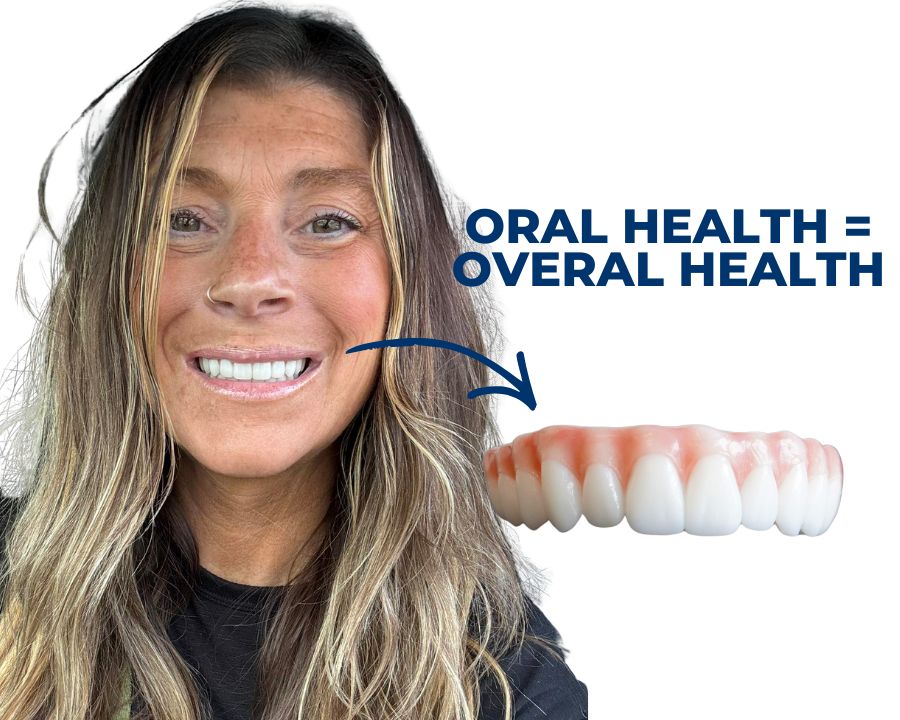
Oral health isn’t just about how your smile looks — it can potentially affect how your entire body functions. When teeth are failing or gums are unhealthy, the impact often reaches far beyond the mouth, influencing heart health, blood sugar, digestion, confidence, and overall quality of life.
Many people don’t realize how connected these systems are until dental problems start piling up. And by that point, brushing, cleanings, and short-term fixes may not be enough.
For some, understanding this connection becomes the turning point — when it makes sense to consider a more complete solution that addresses the root problem, not just the symptoms, like restoring a full set of permanent teeth in 24 hours.
How Oral Health Affects the Rest of the Body
Problems in the mouth don’t always stay in the mouth. Research shows that chronic dental issues can contribute to inflammation and stress throughout the body — especially when teeth are infected, failing, or missing.
Heart Disease Connection:
The health of your gums often plays a role in the health of your heart. Gum disease can be linked to chronic inflammation, which researchers believe may contribute to heart disease and other cardiovascular problems.
When infections in the mouth go untreated, bacteria and inflammation don’t just disappear — they can enter the bloodstream. For people living with ongoing dental problems, this means oral health may be adding strain to the heart over time.

Diabetes:
If you or a loved one has diabetes, here's something you might not know: gum disease can make managing blood sugar levels more challenging. It's a two-way street; diabetes can make you more prone to gum disease, and gum disease can raise blood sugar levels. It's a connection that emphasizes the importance of dental care in managing diabetes.
Respiratory Infections:
Bacteria from the mouth can be inhaled into the lungs, increasing the risk of respiratory infections like pneumonia — especially in people with ongoing dental infections or gum disease.
When oral bacteria are left unchecked, they don’t just affect breath or gums. They can travel, turning dental problems into respiratory ones.
Digestive Issues:
Digestion begins with chewing. When teeth are missing, loose, or painful, food isn’t always broken down properly — which can strain the digestive system and contribute to issues like discomfort or poor nutrient absorption.
For people with failing teeth, this isn’t just an inconvenience. Over time, poor chewing can affect digestion, energy levels, and overall health — reinforcing how oral function supports the entire body.
Oral Health and Mental Health: The Overlooked Connection
While oral health clearly affects the body, research shows its impact doesn’t stop there — it also plays a role in mental and emotional well-being.
Over the past two decades, research has shown strong links between tooth loss, poor oral function, and mental health challenges such as depression, anxiety, social withdrawal, and reduced quality of life.
For many people, the impact is gradual. They slowly adapt to hiding their smile, avoiding certain foods, or pulling back socially — and that daily stress can quietly take a toll over time.
Dental Implants and Mental Health Benefits
Clinical studies show that people who replace missing teeth with dental implants often report improvements in quality of life, including psychological comfort — especially compared to dentures or untreated tooth loss.
In a 2023 study using the OHIP-14 scale, patients who received full-arch dental implants saw scores improve from 26.7 (poor quality of life) to 4.6 (minimal impact on quality of life), with the most improvement in psychological discomfort and emotional distress .
Dental implants don’t treat mental health conditions — but research suggests that removing daily stressors like instability, pain, and embarrassment may support emotional well-being.
Confidence, Self-Esteem, and Social Comfort
A healthy smile plays a major role in confidence and how comfortable a person is in social settings.
Studies show that dental confidence is closely linked to self-esteem and life satisfaction, while missing or failing teeth can contribute to embarrassment and social avoidance.
By restoring stability and function, dental implants can help many people feel more comfortable speaking, smiling, and engaging with others again.
Tooth Loss, Depression, and Brain Health
U.S.-based studies have found that extensive tooth loss is associated with higher rates of depression. One NIH-backed study showed that losing 10 or more teeth was linked to depression levels comparable to major depressive disorder .
Tooth loss has also been linked to cognitive decline. Chewing stimulates blood flow and neural activity in the brain, and research suggests that replacing missing teeth — including with implants — may help support chewing function and cognitive performance, though studies are ongoing.
Oral Health and Mental Health Matters
Mental health is shaped by everyday experiences.
When oral health problems affect eating, speaking, smiling, or social comfort, they can quietly influence emotional well-being over time. Addressing oral health isn’t just about teeth — it’s about quality of life.
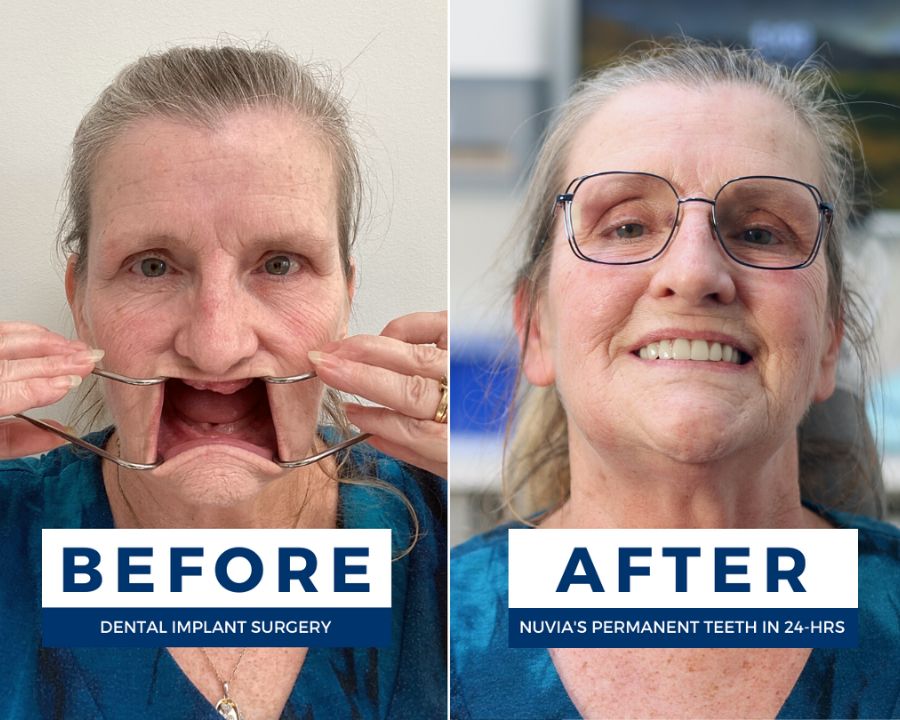
Permanent Teeth in 24 Hours - Your Overnight Solution
When someone is living with failing or missing teeth, the issue isn’t just cavities or chewing — it’s more often than not the constant strain on daily life. Difficulty eating affects nutrition, instability and pain create ongoing stress, and avoiding smiling or social situations can quietly wear down confidence and mental well-being.
This is where full mouth dental implants with permanent teeth in 24 hours can change the trajectory. By replacing failing teeth with a fixed, stable smile in a single day, this approach addresses many of the physical and emotional challenges at once — restoring chewing function, removing daily uncertainty, and allowing people to speak, eat, and smile without fear again.




.jpg)

.jpg)