

If you’ve started looking into dental implants, you already know—there’s a lot of mixed information out there.
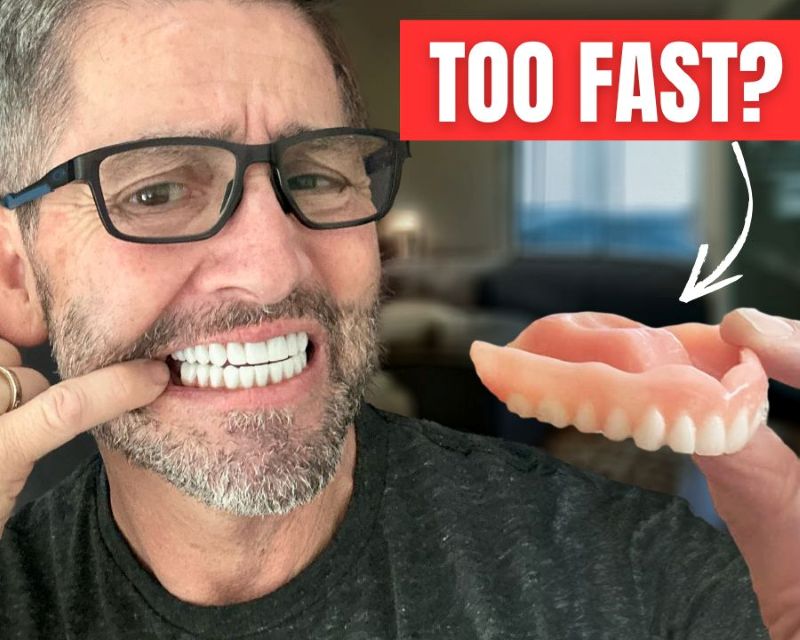
Some say it takes close to a year before you have your new smile. Others promise “teeth in a day,” but don’t mention that those teeth are usually made of plastic and you’ll likely be wearing them for months. Either way, if your provider is using a traditional method of doing dental implants, there’s a high chance it’ll take months to finally have the smile you want.
This can be incredibly frustrating and inconvenient. From the potential of healing set backs, to feeling like you don’t have a smile that’s truly yours - temporary teeth come with many drawbacks.
That’s why Nuvia does it differently. You deserve a smile that’s yours right away and a process that’s designed to help your healing, not hinder it. Permanent teeth in 24 hours is life-changing, safe, and available all over the U.S at Nuvia Dental Implant Centers.
Whether you’re curious about how permanent teeth in 24 hours really works, wondering what recovery feels like, or just trying to make sense of all the information out there — we’ve rounded up the top 20 questions people ask about dental implants (and their answers) in this guide to help you feel confident about your next step.
1. What Exactly Are Dental Implants?
If you’ve lost teeth—or know you’re about to—you’ve probably wondered how dental implants really work.
In simple terms, dental implants are small titanium posts placed in your jawbone to act like the roots of natural teeth. Once healed, they create a strong, lasting foundation for new teeth that look, feel, and function just like the real thing.
Unlike dentures or bridges that sit on top of your gums, dental implants fuse with your bone—becoming part of you.
That stability is what allows you to laugh, chew, and smile without worry.
2. How Common Are Dental Implants?
Millions of Americans already have dental implants—and that number grows every year.
They’ve become the gold standard for tooth replacement, especially for people missing most or all of their teeth.
For full mouth restoration, implants offer something dentures and bridges simply can’t: a permanent, fixed, long-term solution that protects your bone and lets you eat normally again.
.jpg)
3. Are Dental Implants Safe?
Yes. When planned and placed by an experienced dental implant team, dental implants have a long record of predictable, successful results.
They’re made from biocompatible materials that the body typically accepts well and have been used in dentistry for decades.
At Nuvia Dental Implant Center, every procedure is performed by a dedicated surgical and anesthesia team following advanced safety protocols. Our documented success rate from 2022–2024 is 99.1%, which is consistent with and higher than large multi-center studies reported in the dental literature.
4. Do Dental Implants Hurt?
Most patients are surprised by how comfortable the process is.
With modern anesthesia and sedation, you’ll be totally asleep and relaxed during surgery—some patients have even described the experience as easier than a tooth extraction.
Some mild soreness afterward is normal but is usually managed with over-the-counter medication.
Many patients return to normal activities within a few days.
5. How Long Does the Dental Implant Process Take?
That depends on where you go.
At many traditional offices, the full process can take up to 10+ months—with multiple healing phases and temporary “healing teeth” you’ll wear for months before getting your final set.
At Nuvia Dental Implant Center, it’s different.
Patients receive their permanent zirconia teeth just 24 hours after surgery.
No waiting. No temporary “healing” denture. No “try-in” phase.
Here’s how it compares:
Comparison of Traditional Approach to Dental Implants vs. Nuvia 24-Hour Process
6. Are There Any Risks?
Every surgery carries some level of risk — and dental implants are no different.
But here’s what matters most: the team, the process, and the technology behind it.
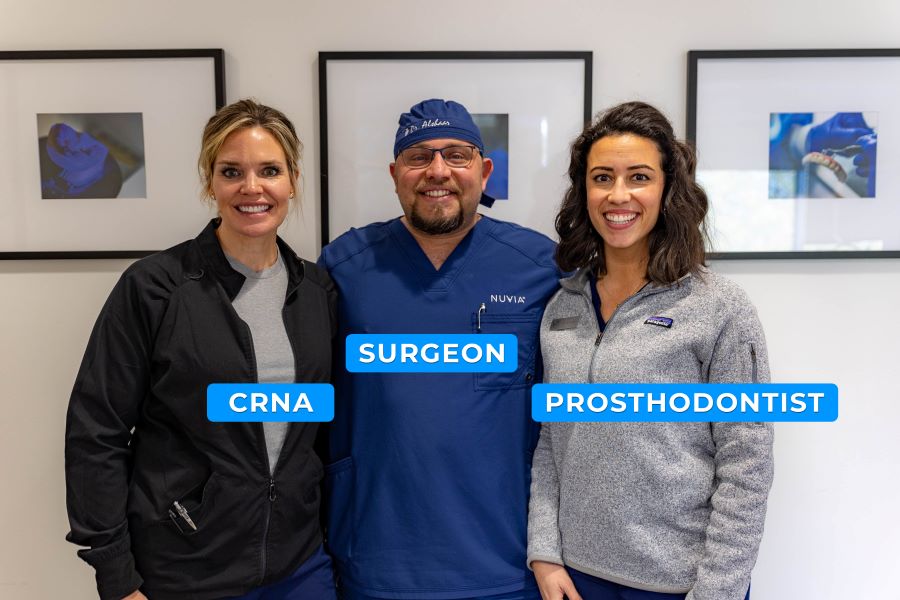
Common risks like infection or implant failure are rare, especially when your care is handled by a highly-experienced surgical team with in-house lab coordination.
At Nuvia, every step — from 3D imaging during your consultation to placing the implants and attaching the final zirconia restoration — happens under one roof, which means no handoffs, no guesswork, no hidden surprises.
Choosing the right team doesn’t just help you reduce risk — it can set you up for lasting results.
7. What Are the Biggest Benefits of Dental Implants?
After years of struggling to eat, hide their smile, or worry about dentures slipping, patients are able to finally feel like themselves again with a new set of permanent teeth.
Here’s what patients often tell us they love most:
- Eating real food again — apples, steak, even corn on the cob.
- Teeth that look and feel natural — no clicking, no glue.
- A solid, fixed smile built to last.
- The confidence to smile freely
With Nuvia’s 24-hour process, you don’t spend months in “healing teeth.”
You get your permanent zirconia teeth the next day so you can start enjoying the benefits of dental implants right away.
%20(2).jpg)
8. What Can I Eat After Surgery?
Your mouth will need a little time to adjust, so start with soft foods — smoothies, mashed potatoes, yogurt, soups.
Your care team will make sure you have all the aftercare instructions you need including what foods are part of a “soft-food diet”. Typically patients are given the all clear to eat whatever they’d like at the 4 month check-up if everything is going well.
For more on what you can eat both right after surgery and later down the road, see Sandy and Ricky’s experience here.
9. How Soon Can I Get Implants After Tooth Extraction?
At Nuvia, it all happens in one procedure.
During your surgery, any remaining failing teeth are carefully removed, and your oral surgeon immediately places your dental implants in the same procedure.
There’s no waiting period between extractions and implant placement — no temporary dentures or months of healing before you get your new smile.
Once your implants are placed, our in-house lab designs and crafts your custom zirconia teeth overnight. Within 24 hours, you return for your final fitting — not a plastic temporary, but your permanent, functional smile.
10. Can My Body Reject a Dental Implant?
True “rejection” is very rare. The few implant failures that do occur are usually related to bone health, infection, or smoking—not your body rejecting the material. To find out more about dental implant failure and steps you can take to avoid it, read this article.
11. How Long Do Dental Implants Take to Heal?
Many patients feel back to normal within just a few days, and full bone integration — when your implants fuse with the jawbone — takes a few months. During that time, your new zirconia teeth act like a rigid splint, keeping everything stable and protected while your body heals naturally.
12. What Should I Avoid After Surgery?
For a smooth recovery:
- Stop smoking (it slows healing and can lead to dental implant failure).
- Avoid drinking through straws for a few days.
- Take it easy on exercise until your care team gives the all-clear.
You’ll receive detailed aftercare instructions — follow them closely and you’ll help your implants integrate as expected so your new teeth have a strong foundation.
Pro tip: Staying hydrated and getting good rest those first few days can make a big difference.
13. Can Dental Implants Be Removed?
Full mouth dental implants are designed to be a long-term, permanent solution — but if one ever fails (which is uncommon), it can be replaced. Other than those rare instances, neither the dental implant nor your new set of teeth are designed to be removed.
Implants become part of your jawbone through a natural process called osseointegration, which gives them their strength and stability. In short: they’re meant to last — not to come out.
Although failure can happen, it is extremely rare when you go to an experienced provider. Nuvia’s dental implant success rate between 2022-2024 was 99.1% (higher than what’s been reported in large studies of other providers).
14. Who’s a Good Candidate?
Many healthy adults with 5+ missing or failing teeth qualify for a new smile at Nuvia — even if they’ve been told “you don’t have enough bone” elsewhere.
To really get an idea if you may be eligible for a full set of new teeth, you can take the 60-second eligibility quiz here.
15. Can My Dentures Be Converted to Implants?
Dentures themselves can’t be turned into implants — but dental implants can be used to stabilize them.
This is often called an implant-supported denture.
For many people, this can feel like a big improvement over traditional dentures, offering more stability and comfort. However, they still come with some limitations. If you’re simply anchoring your existing denture, it’s likely made from acrylic or plastic — materials that don’t last like custom zirconia. It’s a partial step toward the benefits of full mouth dental implants, but without the same long-term durability or natural feel.
16. How Do Implants Help With Full or Partial Dentures?
A new set of teeth secured with dental implants is likely to feel and function entirely differently than a denture.
Dental implants act as solid anchors, holding your teeth in place — so you can eat, talk, and smile naturally without worrying about slipping, adhesives, or decreased bite force.
For more on how dentures compare to dental implants, read here.
17. How Long Do Dental Implants Last?
With proper care, dental implants can last a lifetime.
The visible teeth attached to them — especially when made from zirconia — are built for long-term durability.
Why zirconia? It’s one of the most durable materials in modern dentistry — stain resistant, chip resistant, and custom-shaped for your smile.
18. Is the Procedure Painful?
Many patients wonder if getting dental implants hurts. But most patients are surprised by how easy the process feels and how manageable any discomfort is.
At Nuvia, a licensed anesthesia provider (CRNA) ensures you’re comfortably asleep during the surgery so you don’t feel a thing.
Afterward, mild discomfort is normal but typically managed with over-the-counter medication. You’ll have a care team ready to support you and assist with additional pain management if needed.
19. Will Insurance Cover It?
Unfortunately, there’s no such thing as true dental implant insurance.
Most dental and health insurance plans cover little — if any — of a full mouth dental implant procedure. Some may contribute to minor portions like a single extraction, crown, or x-ray, but the full-arch implant surgery, anesthesia, and permanent zirconia teeth are almost never included.
The good news? You still have options. Around 92% of Nuvia patients use flexible payment plans to make their new smile affordable without relying on insurance. And at Nuvia, you’ll always receive clear, upfront, all-in-one pricing — no hidden fees or surprises, just a transparent plan tailored to your treatment.
20. How Much Do Dental Implants Cost?
Each person’s case is unique and cost can vary based on a few different factors - location, individual needs, complexity, provider experience, etc.
To get a better idea of what dental implants may cost you, get the dental implant cost guide here.
You can also view the average costs for full mouth dental implants by state here.
Ready to Take the Next Step?
You don’t have to live another day hiding your smile or struggling to eat the foods you love.
At Nuvia Dental Implant Center, patients go from failing or missing teeth to permanent zirconia teeth in just 24 hours. No temporary set. No waiting months. Just one life-changing day.
If you’re ready to see what’s possible, see if you may be eligible for permanent teeth in 24 hours with the 60-second quiz.




.jpg)
.jpg)
.jpg)