

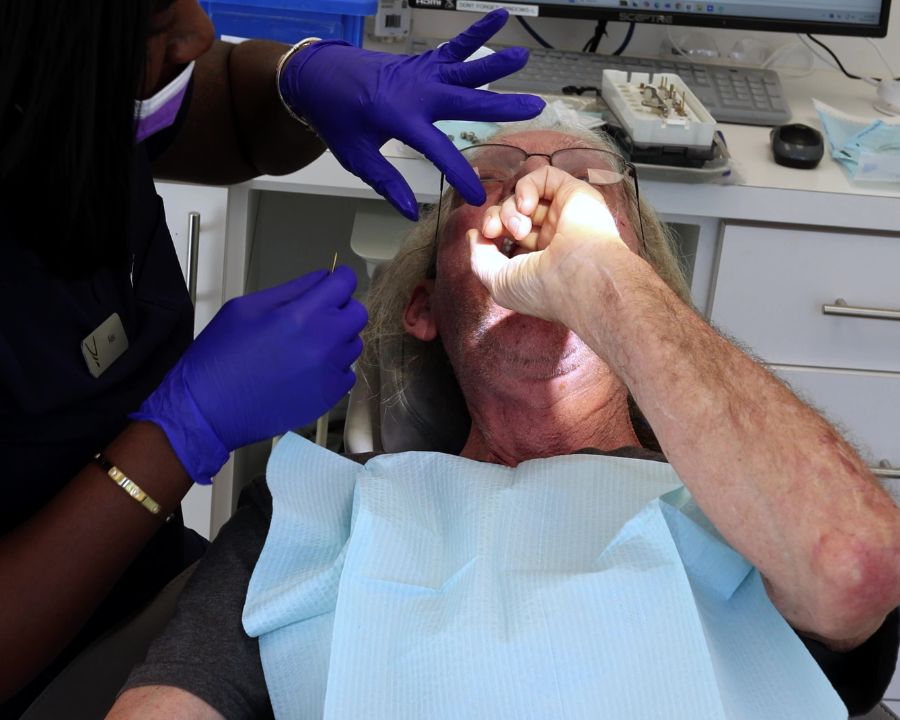
When Ricky sat at the head table at a banquet, surrounded by friends and colleagues, he realized something that devastated him — he couldn’t chew his food anymore.
“I was cutting the steak,” he remembered, “and I realized, I couldn’t chew it anymore. That’s how bad I had neglected [taking care of my teeth]. I kept kicking the can down the road.”
It wasn’t just embarrassing. It was life-changing. Ricky was constantly sick, fighting sinus infections, ear problems, and sleepless nights. Doctors thought it might be his stomach, maybe even cancer returning — but no one looked at his teeth.
When he finally did, everything changed.
After his failing teeth were removed and his dental implants placed and fitted with zirconia teeth within 24 hours at Nuvia, Ricky said something powerful:
“I went home, slept well, and when I got up the next day to get my new teeth, I could already feel my body healing. I haven’t been sick a single day since.”
For Ricky, his transformation wasn’t just about getting his smile back — it was about getting his health back. And science backs that up: your oral health doesn’t just affect your mouth. It affects your entire body.
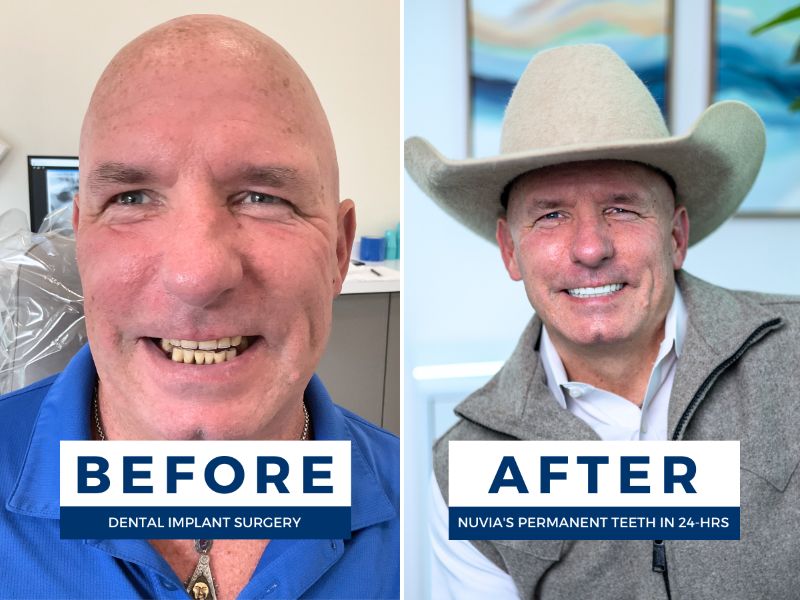
Ricky’s story isn’t rare — it’s just rare that people connect the dots in time. For many in a similar situation, the infections, fatigue, and sleepless nights become ‘normal.’ Until something breaks — their teeth, their health, or both.
According to the World Health Organization, oral health is a key indicator of overall health, well-being, and quality of life. Nearly 3.5 billion people worldwide are affected by oral diseases, and neglecting dental problems can increase the risk of heart disease, stroke, respiratory infections, diabetes complications, and more (WHO, 2024).
Here are five major health risks that dental implants may help reduce — by restoring oral health, stability, and confidence.
1. Heart Disease and Stroke
For years, doctors have known there’s a strong link between oral health and heart health. When your gums are infected, bacteria and inflammation can spread through your bloodstream, damaging blood vessels and making it easier for plaque to build up (Tonetti et al., 2013, J Clin Periodontol).
In one U.S. study that followed people for 15 years, those with severe gum disease were more than twice as likely to have certain types of strokes compared to people with healthy gums (Sen et al., 2018, ARIC Study). Another review of multiple studies found that gum disease increased stroke risk by about 63% (Lafon et al., 2014, Eur J Neurol).
And if that wasn’t enough, losing teeth — often because of untreated gum disease — can make things even worse. Every two teeth lost increases your stroke risk by about 3%, according to a meta-analysis that looked at data from nearly 900,000 people.
Here’s the good news: when missing or infected teeth are replaced with dental implants, it can help remove a major source of inflammation. In fact, a large Swedish study found that people with implants had significantly lower 10-year mortality rates than those wearing removable dentures, regardless of income or background (PubMed 34373694).
For people like Ricky — who saw his sinus infections and systemic illness vanish after his infected teeth were replaced — this research hits home. “Everything is connected,” he said. “When they took the bad teeth out, my whole body started to heal.”
2. Respiratory Infections
According to the Mayo Clinic, bacteria from infected teeth and gums can be inhaled into the lungs, causing pneumonia and other respiratory issues — especially in older adults or those with weakened immune systems (Mayo Clinic, 2024).
Ricky’s story is a vivid example. Before his implant surgery, he battled constant sinus infections and ear issues. Afterward? “I haven’t had a single sinus infection since I got my teeth done,” he said.
Removing infected teeth and replacing them with clean, permanent implant-supported zirconia teeth can help stop these bacterial reservoirs from feeding chronic infections throughout the body.
3. Poor Nutrition and Digestive Problems
When you can’t chew properly, your diet will likely change — and not for the better. Research shows that people missing multiple teeth often restrict their diets to soft, nutrient-poor foods, increasing risks of malnutrition and digestive problems (PubMed 6588038).
One study found that when people lose their back teeth, it becomes much harder to chew properly. As a result, many start cutting food into tiny pieces or overcooking it just to make it easier to eat — and that process actually strips away important nutrients. Over time, that can lead to vitamin deficiencies, weaker muscles, and even a lower immune response.
Dental implants restore bite strength and stability, helping people return to a full, healthy diet — meats, vegetables, nuts, and all. With his new teeth, Ricky can eat anything he wants– including steak.
4. Diabetes and Inflammation
Gum disease and diabetes have a two-way relationship. The inflammation caused by periodontitis can make blood sugar harder to control, and diabetes can make gum infections worse (Mayo Clinic, 2024).
By replacing infected teeth and restoring a healthy mouth, you can help break that cycle. When chronic inflammation is reduced, the body can better regulate blood sugar levels and maintain overall metabolic health — making a real difference for people living with diabetes.
5. Cognitive Health and Alzheimer’s Disease
New research suggests that chronic gum disease might do more than just harm your mouth — it could also affect your brain. When gums stay infected for too long, the inflammation and bacteria can travel through the bloodstream and even reach the brain. Over time, that can contribute to the buildup of the same harmful proteins linked to Alzheimer’s disease (Kamer et al., 2020, PubMed 32385876).
One review found something especially eye-opening: people with gum disease were six times more likely to experience cognitive decline in just six months (Borsa et al., 2021, Int J Environ Res Public Health).
By removing chronic infection and restoring healthy, stable teeth with implants, patients may actually help lower one of the hidden sources of inflammation that can impact brain health over time.
What Are the Risks Associated with Dental Implants?
It’s natural to wonder: if dental implants can help so much, do they come with any risks of their own?
Fortunately, decades of research show that dental implants are among the most predictable and successful medical procedures available.
- A retrospective study found implant survival rates between 93.3% and 98% long-term (PMC5774056).
- An 8-year follow-up from the Academy for Oral Implantology showed 97% survival across more than 13,000 implants (JPIS, 2014).
- Most implant failures occur early, during healing — typically due to infection, smoking, or systemic conditions.
At Nuvia Dental Implant Center, new technology and refinements in our process have taken those success rates even higher. Between 2022 and 2024, Nuvia placed more than 116,000 implants with a {{success_rate}} success rate — and in the rare cases where an implant didn’t take, it was replaced at no extra cost in most situations (internal Nuvia data, 2025).
Bonus: Jawbone Health is at Risk When Missing Teeth: How Do Dental Implants Help Maintain Jawbone Health?
Here’s one most people don’t even realize — when you lose teeth, the bone underneath your gums starts to shrink. It’s your body’s way of saying, “Well, we don’t need this bone anymore.” But the problem is, once that bone is gone, it can’t grow back naturally (ScienceDirect, 2004).
Dental implants help stop that process in its tracks. They act like natural tooth roots, stimulating the bone every time you bite or chew. That daily pressure tells your body to keep the bone strong and healthy — preventing the sunken, aged look that often happens with long-term denture wear.
By keeping your jawbone intact, implants don’t just protect your facial shape — they also help you eat better, speak more clearly, and feel more confident every single day.
A Healthy Smile, A Healthier You
Ricky’s story isn’t rare — it’s a reminder that oral health and whole-body health are deeply connected.
When infection, inflammation, and poor nutrition are addressed through modern implant treatment, people don’t just regain their smiles. They also have the chance to regain energy, confidence, and vitality.
And thanks to innovations like Nuvia’s 24-hour permanent zirconia teeth process — eliminating months of temporary dentures — patients often share how they went from sick, struggling, and self-conscious to healthy and confident in just one day.
Sometimes, the key to better health isn’t another medication or test. It could be starting with your teeth — and giving your body the chance to heal from the inside out.
Don’t wait for another infection, sleepless night, or doctor visit that treats symptoms instead of the cause. Take the 60 second quiz now to see if you may qualify for the same 24-hour transformation that’s restored health and function for thousands of Nuvia patients.
Every month of waiting could mean more bone loss and more risk — but you can stop that process today.
Sources:
Mayo Clinic (2024); WHO (2024); Tonetti et al., 2013; Lafon et al., 2014; Fagundes et al., 2019; Sen et al., 2018; Lee et al., 2013; Kamer et al., 2020; Borsa et al., 2021; JPIS, 2014; Nuvia Internal Data (2025); ScienceDirect (2004); PubMed 34373694.




.jpg)