

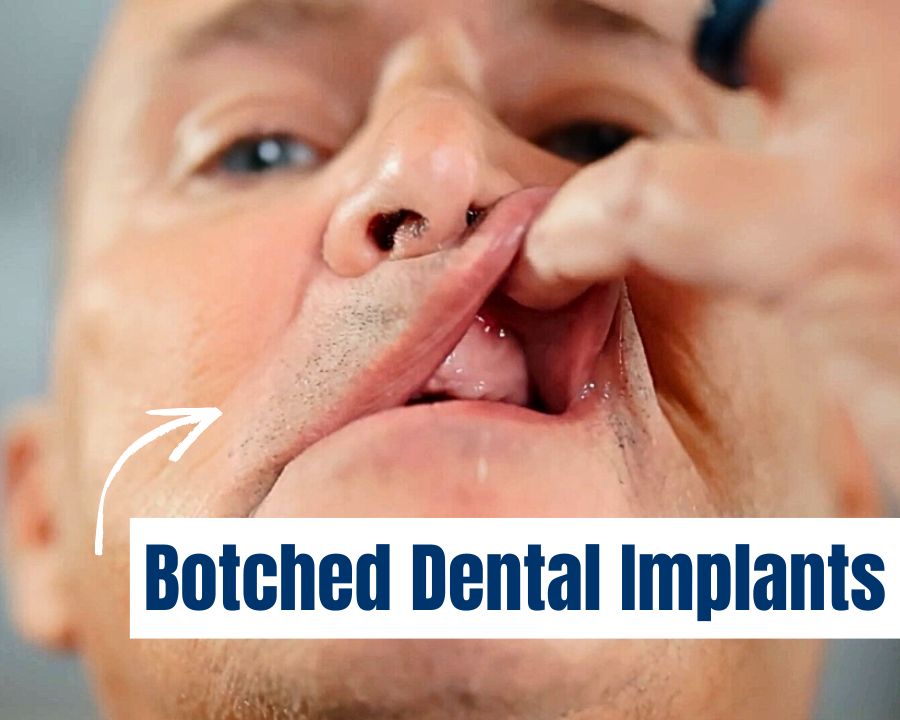
If you’ve ever seen someone go through botched dental implants, you know it’s not just about teeth—it’s about confidence, comfort, and quality of life.
Mike knows that better than anyone. Back in 2019, he went through an implant procedure with another provider. Unfortunately, things didn’t go as planned. The surgery failed, and Mike ended up back in dentures.
He thought that was it. That maybe he’d have to live without the smile he’d always dreamed of.
But when Mike came to Nuvia, things changed.
**Actual NUVIA patient(s) who may have been compensated for sharing their story. Not all those who come in for a consultation are eligible for this treatment. Results may vary in individual cases.
Common Causes of Botched Dental Implants
Dental implants can fail for many reasons, but many trace back to one thing: poor planning or execution.
Here are the top causes dentists and oral surgeons frequently see:
- Inexperienced providers – Dental implant surgery is complex. It takes a skilled oral surgeon and a precise plan to make it work long-term.Especially when it comes to full mouth dental implants, you likely don’t want a general dentist who just took a weekend course on dental implants handling your procedure (this actually happens!)
- Poor bone quality – If bone isn’t strong enough, dental implants can loosen or fail. This is another reason it’s so important to work with an experienced provider who can properly assess your bone levels.
- Improper placement – When implants aren’t positioned correctly, they may not integrate with the bone properly.
- Infection or poor hygiene – If the gums don’t heal well for one reason or another, infection can cause dental implants to fail. Setbacks in healing can come from poor dental implant aftercare and poor hygiene among other things.
- Setbacks can also come if you are given a fragile, temporary set of teeth instead of permanent teeth right away. To avoid breaks, cracks, and any general discomfort that comes from a plastic set of temporary teeth, Nuvia patients get their final, zirconia teeth right away.
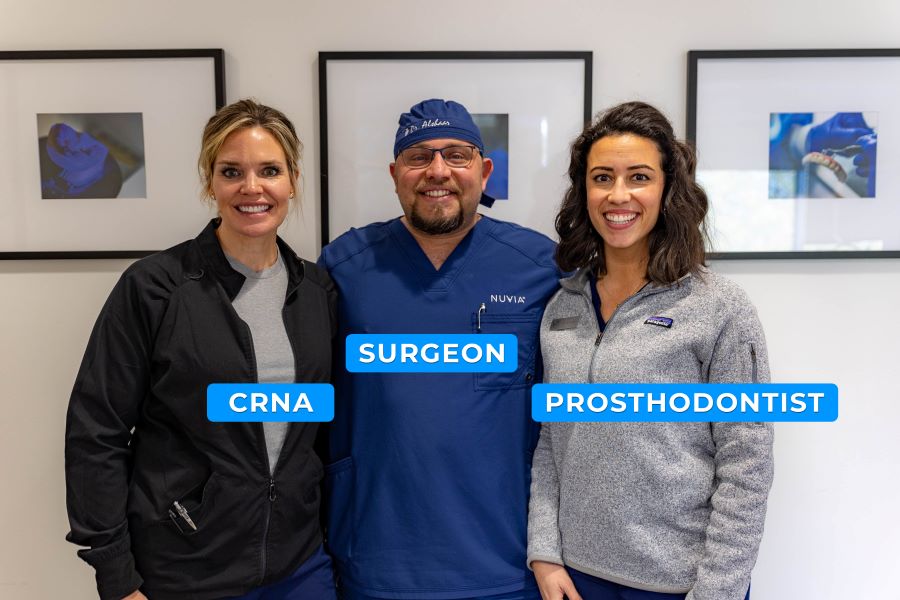
- Lack of collaboration – Some providers try to handle everything themselves instead of using a full team approach. A different approach designed for success and patient safety is having a team of experienced providers including a restorative dentist, oral surgeon, and CRNA.
-
At Nuvia, that’s the team that every patient works with. A full team, all in one place, that does full mouth dental implants day in and day out. No bouncing between offices or waiting months between steps. Everything happens under one roof, with a focus on safety, precision, and care.
Mike’s Story: From Failed Implants to a Fixed Smile
When Mike arrived at Nuvia, he had minimal bone left in his upper jaw. Other providers told him he wasn’t a candidate for dental implants after his failed procedure.
But the Nuvia team saw something different.
Because his bone was soft and thin, the surgeon planned to use zygomatic implants—an advanced approach that anchors the implants higher up in the cheekbone, where the bone is stronger.
The surgery went smoothly. And just 24 hours later, Mike returned for his new permanent teeth—not a denture, not a long wait, but a brand-new, fixed smile.
And the best part?
“Just when I thought all hope was diminished, Nuvia renewed that and here I am.”
A new smile gave Mike his hope back.
.jpg)
Why Some Dental Implant Centers See More Failures Than Others
Traditional full mouth dental implant methods can take up to 10+ months to complete, with patients wearing temporary dentures or “conversion teeth” while everything heals.
During that time, things can go wrong (especially if those healing teeth break or crack)—implants can shift, the bite can change, or patients simply give up before the process is over.
Nuvia does it differently.
Patients receive permanent zirconia teeth in just 24 hours, not months. This means no chances for complications due to healing teeth, no discomfort from healing teeth, and the chance to get used to a final set of teeth right away instead of months down the line.
That process is part of why Nuvia’s implant success rate in 2024 was 99.1%, compared to 93.3% to 98% success that large studies of other providers report.
Signs of a Botched Dental Implant
If you already have dental implants elsewhere and something doesn’t feel right, here are a few red flags to look for:
- Pain that lasts more than a few weeks
- Loose or shifting implants
- Swelling or pus around the implant site
- Trouble chewing or biting
- Visible gaps after your 4 month check in or uneven bite
If you notice any of these issues, don’t wait. Getting a second opinion early can potentially save you from more pain (and cost) later.
Hope After a Botched Implant
Mike’s story proves one powerful thing: Even after a failed dental implant procedure, there’s still hope.
With advanced planning, bone reconstruction, and a full surgical team, it’s possible to rebuild your smile—even when other clinics say it can’t be done.
At Nuvia, patients who once thought they had “no bone left” are now eating steak, smiling confidently, and living free of dental struggles.
Ready to See What’s Possible for You?
If you’ve experienced botched dental implants, or if you’re nervous about starting the process for the first time, it’s time to see the difference Nuvia can make.
Take the 60-second quiz to see if you may be a candidate for permanent teeth in 24 hours, or download the free Dental Implant Cost Guide to learn more.
Because life’s too short to keep hiding your smile.




.jpg)
.jpg)

.jpg)