

.jpg)
Does medical cover dental implants? For most people, the answer is no — but it depends on what caused the tooth loss and what type of insurance you have. This article breaks down how medical and dental coverage actually work, when exceptions apply, and what 92% of patients are actually doing to make dental implants affordable.
If you thought you were out of options, that may not be the case. First, take the 60-second quiz below to see if you may be eligible for permanent teeth in 24 hours, then keep reading to learn how financing works.
Take the 60-Second Quiz Here →
Medical vs. Dental Insurance: What's the Difference?
Medical and dental insurance are completely separate systems. Medical insurance usually covers things tied to your overall health — injuries, surgeries, hospital stays, and treatment for diseases. Dental insurance typically covers routine care like cleanings, fillings, and extractions.
Dental implants usually fall under dental coverage. But even then, most dental plans only cover them partially if at all. Plans that do cover implants often cap payment at a certain dollar amount for a single implant here or there. This rarely makes a meaningful difference for those who need full mouth treatment.
If people aren’t using medical or dental insurance, how are they paying for full mouth dental implants? We’ll cover that soon. First, let’s clarify why medical insurance often doesn’t cover dental implants.
When Are Dental Implants Medically Necessary?
Medical insurance can get involved when tooth loss happens because of a medical condition or procedure instead of everyday decay or other isolated reasons for tooth loss. This is called "medical necessity," and it's the main scenario where a health plan might pay for some part of implant treatment.
Examples where a medical claim might apply:
- Oral cancer treatment that required tooth removal
- Jaw reconstruction after an accident or injury
- Certain systemic conditions that caused bone or tooth loss
- Tooth loss as part of a covered surgery
Even in these cases, coverage usually applies to specific steps — not the full implant process. Coverage also largely depends on the plan you have.
Which Medical Conditions Qualify for Coverage?
There's no universal list, and every plan handles this differently. Conditions that sometimes support a medical necessity claim include head and neck cancer, Sjögren's syndrome, osteonecrosis of the jaw, and documented trauma-related tooth loss.
To get a claim reviewed, you'll typically need records from both your dentist and your doctor, a letter of medical necessity, and documentation that links your tooth loss directly to a covered medical event. It's a lot of paperwork, and approval still isn't guaranteed.
So Does Medical Cover Dental Implants?
If your tooth loss is tied to a specific medical condition or procedure, it's worth asking your insurer whether a claim makes sense. For most patients, though, financing is the more reliable path.
Curious about what determines cost? Download the Free Cost Guide for factors that affect pricing.
Your Options When Insurance Falls Short: Dental Implant Financing
Most people who get full mouth dental implants at Nuvia pay through financing, not insurance. Monthly payments typically run between $250 and $900 depending on whether one or two arches of teeth are being replaced. You'll see your exact number at your consultation before committing to anything.
Nuvia also works with multiple lenders and has options for patients who may not qualify on their own — like bringing in a family member as a co-signer.
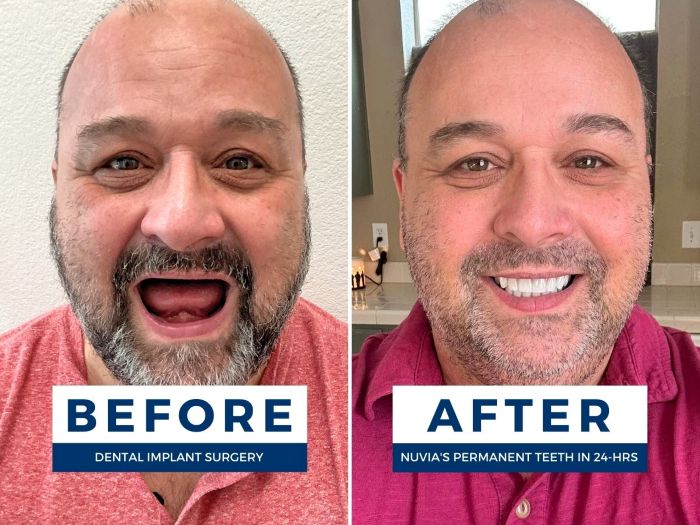
On top of that, Nuvia's Permanent Teeth in 24 Hours process means you leave with your final, permanent teeth the day after surgery — not a temporary set. One surgery, one recovery, and you're done. If you’ve spent years managing failing teeth or uncomfortable dentures, this is your 24 hour, one and done solution.
Take the 60-Second Quiz to see if you may be eligible for permanent teeth in 24 hours →
What Most Insurance Plans Won't Cover — And Why
Even dental plans that list implant coverage usually come with restrictions that limit how much they actually pay out:
- Annual maximums that can reset each year — often $1,000 to $2,000 total, not per tooth
- Waiting periods before implant coverage kicks in, sometimes one to two years
- Missing tooth clauses that exclude teeth lost before the policy started
- Partial coverage for only one component — the crown, for example, but not the implant post
Be sure you understand any fine print that may come with your plan details to avoid misunderstandings and frustration later.
How to Check if Your Plan Covers Dental Implants
Call your insurance company and ask these questions directly:
- Does my plan cover dental implants?
- What is the annual maximum for implant coverage?
- Is there a waiting period, and has mine been met?
- Does my plan have a missing tooth clause?
- What documentation would I need to file a claim?
It’s a good idea to ask for the answers in writing so you have a record.
Health Benefits Beyond a Healthy Smile
One thing worth knowing: dental implants aren't purely cosmetic despite them often being labeled that way by insurance.
When teeth are missing, the jawbone underneath is likely to start to shrink. Over time, that can affect the shape of your face, your ability to chew, and your overall nutrition. Implants are the only tooth replacement option that stops bone loss because they replace the root, not just the visible part of the tooth itself like dentures or a partial might.
If you’ve been thinking about dental implants as just a cosmetic fix, you may want to shift your thinking. Not only is bone loss a risk, failing teeth and periodontal disease have been linked to heart disease and other health risks.
At Nuvia, we hear countless patients who restore their smiles with dental implants only to have other secondary health issues seemingly resolve on their own. Your oral health plays a big role in your overall health as well.
Common Myths About Dental Implant Coverage
Myth: Good insurance means implants are covered. Even comprehensive dental plans often exclude implants or cap reimbursement far below actual treatment costs.
Myth: My doctor's recommendation is enough for a medical claim. Medical insurers define necessity differently than your dentist does. Documentation from both sides is usually required, and a claim can still be denied.
Myth: If insurance won't cover it, implants are out of reach. This is the one most worth pushing back on. Most patients at Nuvia don't use insurance to pay for treatment. They use a monthly payment plan — and 92% of patients qualify for financing.
The answer to whether or not medical insurance covers dental implants is usually not what people want to hear. However, a solution is likely still in reach through dental implant financing. The first step in seeing what’s possible is to take the 60-second quiz to find out if you may be a candidate for permanent teeth in 24 hours.




.jpg)