This website uses cookies to ensure the best experience on our website.
We may share your information with our advertising and analytics partners as outlined in our
Privacy Policy.
Healing after full mouth dental implants is typically far more manageable than patients fear, with discomfort that is expected, manageable and closely supported by a hands on care team.
Temporary changes like swelling, speech adjustment, or small gaps are a normal part of healing—and are planned for and resolved as treatment progresses.
By six months, most patients aren’t thinking about their dental implants at all; they’re eating, speaking, and smiling confidently as life returns to normal.
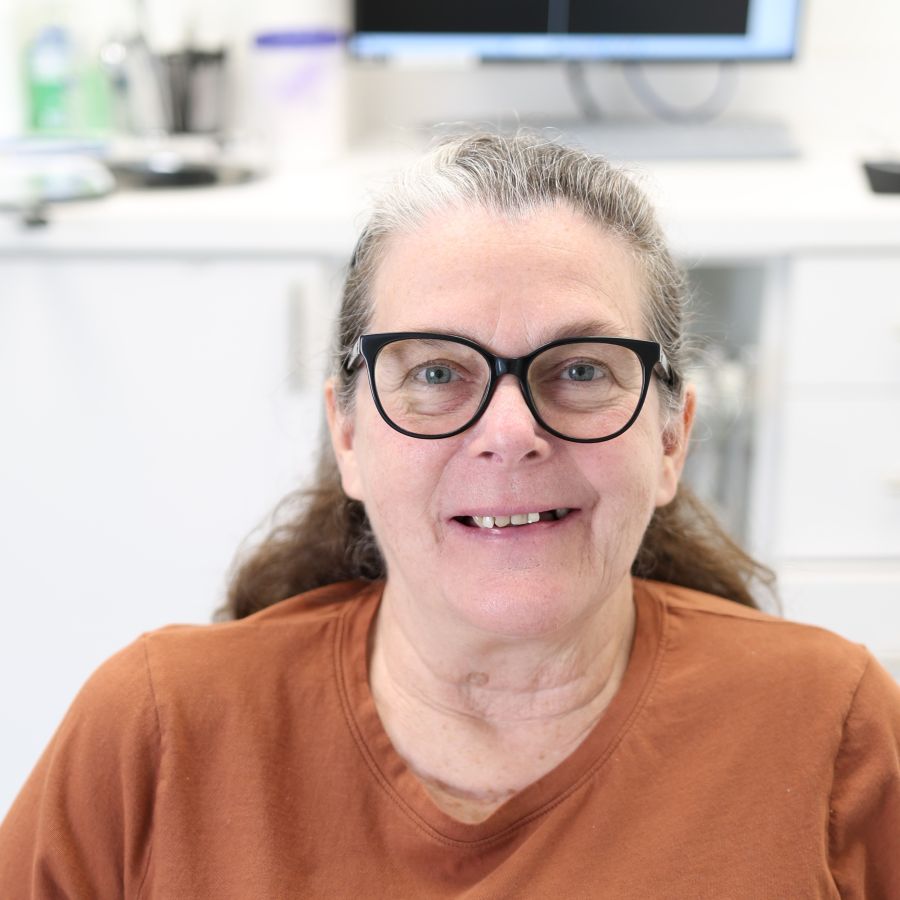
Meet Teri, The Patient
Name: Teri Procedure: Full mouth dental implants Timeline: 6 months post-procedure Context: Permanent teeth delivered within 24 hours
The Situation (Before Surgery)
Like most patients considering full mouth dental implants, Teri walked into surgery with fear—not just of pain, but of regretting the procedure once she had gone through it.
She expected:
Extreme pain
Raw, exposed gums
A long, miserable recovery
Embarrassment during healing
And the nagging fear of “What if I make the wrong, irreversible choice?”
Those expectations almost stopped her from getting a new smile in the first place.
What Actually Happened
Teri’s experience was very close to what her Nuvia care team explained ahead of time. She knew to expect pain, swelling, and healing. What surprised her was how manageable the process turned out to be.
The discomfort was real, as expected with any surgical procedure, but far less intense than she had imagined. She had a supportive care team that prepared her for what dental implant aftercare would be like and what she could do to support her recovery.
What mattered most was having a healing process that was clearly explained, closely monitored, and consistently supported. Because of this Teri was able to feel confident and at ease during recovery.
Hi, my name is Teri, and I've had my new dental implants for six months now, and I'm here to tell you all about the things I like and what I don't like. Even though I was surprised that the pain was nowhere near what I anticipated it to be, obviously a major surgery will cause you to feel it. You go into these surgeries with these preconceived notions of just how painful it would be. And why wouldn't you? I mean, they're taking all of the teeth out of your mouth. The amount of pain that I experienced was surprisingly so much less than I thought it would ever be. I also was anticipating going back and having the actual prosthetics put in onto the implants thinking, you know, there's raw gums in there. This is not going to be a fun thing. When they started, it was not a painful situation. I know it's hard to believe, but the fact of the matter is that even though they're taking these wonderful implants and putting tips on them and whatever it is necessary to place those prosthetics into your mouth, it actually feels pretty good when it's all done because those prosthetics are actually holding your gums up a little bit, and that is also part of the healing process. So you also have stitches in your gums, and believe it or not, the tail end of those will stick out up underneath the edge of your prosthesis, your actual teeth. And don't worry about them. They will dissolve over time. And, you are gonna go back in for a checkup in a couple of weeks. So if there's anything that's still there that hasn't actually gone ahead and removed itself, those stitches come out. It's no big deal. Your mouth has wonderful healing properties and it literally will heal up so much faster than you ever would believe it would. So in four months' time, when you have the surgery done, your gums are swollen, and so your prosthetics are nice and tight. Over time, as your gums heal, those gums have a tendency to go down. And that's what you want them to do. And a gap is necessary because you can't have these prosthetics bumping up against your gums all the time. So that gap, actually I'm grateful for because that lets me know whether or not I have food stuck or not. So that's one of the first things that I really don't like, but I appreciate because it does do things for you to go forward with. Let's talk about that mouthful of marbles. They're not your real teeth. They don't feel like your real teeth. Your tongue doesn't know what to do with itself. And you are going to be talking funny, even for yourself. So at first you're going to be whistling. I sure was. Sometimes. But the fact of the matter is the more you speak and the more that you allow your mouth to get used to these foreign objects in your mouth, the easier it gets. And I am able to speak a whole lot freely, more freely. I'm literally becoming less conscious of what I sound like, even though I can still hear. There's some singing going on. But the fact of the matter is that my tongue is now happy with where my teeth are and I'm hoping that when my annual comes around that I will not even be conscious of it anymore. Everybody talks about the process of how quickly you get your new teeth. With Nubia, you literally go in for your surgery. The procedure begins. You don't know what's happening, and it's a really good thing, I'm sure. And then you go into recovery, which is right there in the same room. You're not moved around. And they make sure that you're taken care of. And then you do go home that night. What you think is going to be horrible is not. You might look like a chipmunk with the wonderful ice pack on your face and do take the pain medication if you need it. And you probably will that first night. I know I did. And the next day, you go right back in. And you're in there, and they take their time, and they make sure that everything is looking well, and your teeth are literally made overnight so they're ready and waiting for you when you get there. They put them in. That immediately makes your gums feel so much more comfortable, and the process of healing goes forward. In a week's time, you're sitting there going, Wow, did I really have that done? And before you know it, you're six months down the road like I am. You're eating anything you want, literally anything you want, and it was worth that one night of not having any teeth in your mouth. I don't think anybody wants to go and spend an exorbitant amount of money. The thing about it is that there are many different ways that you can get this done. There are many different financing plans available for all different situations. So I did start out with checking into the financing situation. And like I said, there were a lot of different plans. And I gave very specific guidelines on what I was interested in. And they were able to provide that for me. Are you worth being able to smile? How much do dental implants cost? Download the free cost guide in the description below to find out.
*Actual NUVIA patient(s) who may have been compensated for sharing their story. Not all those who come in for a consultation are eligible for this treatment. Results may vary in individual cases.
Healing Timeline: What to Expect (Real Patient Experience)
Timeframe
What Teri Experienced
What That Means for Patients
Surgery Day
Sedation during procedure; no awareness of surgery itself
Fear is usually worse than reality
First Night
Swelling, soreness; pain medication used
Discomfort is temporary, expected, and manageable
Day 2
Permanent teeth placed; immediate gum support
Teeth stabilize gums and aid healing
First 2 Weeks
Dissolving stitches; follow-up check
Healing is monitored and patients are sticking to a soft-food diet
1–4 Months
Gums shrink slightly as swelling reduces
Normal, healthy healing — not a problem
6 Months
Eating freely, speaking confidently
The initial stage of healing complete. After the 4 month check up, patients are typically cleared to eat whatever they'd like
What Patients Are Told to Expect During Healing
Here are a few normal adjustments Teri experienced during healing—each of which was explained in advance and expected as part of the process:
The small gap that forms as gums heal and swelling reduces
The temporary “mouthful of marbles” sensation as the tongue adapts
Occasional whistling or altered speech early on
These weren’t surprises or problems. They are things many patients experience as a normal part of healing.
The gap, in particular, is planned for. It doesn’t happen to every patient but if a gap does appear, it is then addressed at the four-month appointment as part of the planned final fit.
One Important List: Adjustments That Are Normal (and Temporary)
Many patients, like Teri, come in after struggling with missing teeth for years. After getting a full new smile, it is normal for the tongue and mouth to take time to adjust. Here are just a few adjustments some patients may experience:
Remembering what the initial healing stage was like Teri commented on how quickly it goes by, “In a week's time, you're sitting there going, Wow, did I really have that done? And before you know it, you're six months down the road like I am. You're eating anything you want, literally anything you want, and it was worth that one night of not having any teeth in your mouth.”
Since getting her new teeth there hasn’t been any fear, and she definitely hasn’t felt any regret about having the procedure done.
By six months, she wasn’t thinking about implants at all—she was living with them as if they had been her teeth her whole life.
Cost, Financing, and the Decision Question
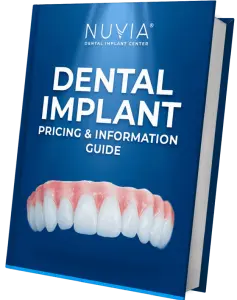
Like others, Teri wondered about cost and how much it would be to get full mouth dental implants. Not only was the dental implant cost guide a big help, but during her consultation she was shown a few different payment plan options to choose from.
Speaking on cost, Teri says, “I don't think anybody wants to go and spend an exorbitant amount of money.
The thing about it is that there are many different ways that you can get this done. There are many different financing plans available for all different situations. So I did start out with checking into the financing situation. And like I said, there were a lot of different plans.
And I gave very specific guidelines on what I was interested in. And they were able to provide that for me.”
In the end it came down to one question for Teri. “Are you worth being able to smile?” Her answer was yes and she hasn’t had a regret about the decision since.
Along the way Teri learned from her experience that
Healing wasn’t endless
Pain wasn’t overwhelming
Adjustments weren’t permanent
And things like a small gap are planned for and taken of by Nuvia
Oftentimes when people put off full mouth dental implants it’s not because they can’t do it—but because they’re afraid of:
Making the wrong permanent choice
Being trapped in a painful recovery
Not liking how their new teeth turn out
Investing in themselves and regretting it
Teri’s was in the same boat and her experience goes to show that although these fears are valid, they ended up not being an issue at all
Don’t let fear keep you stuck. Take the 60-second quiz now to see if you may qualify for permanent teeth in just 24 hours
Find Out If You May Be Eligible For Permanent Teeth in 24 Hrs.
Fill Out The 60-Second Quiz Below
By proceeding you agree to our Terms and Conditions and confirm you have read and understand our Privacy Policy, and you consent to receive emails, texts and calls from Nuvia regarding your inquiry (even if you are on a Do Not Call Registry). Message and data rates may apply. You may opt out at any time by replying STOP.
Lucy Steckler manages the website at Nuvia Dental Implant Center. Having spent over a year being involved in dental content creation, she finds purpose in helping individuals find answers to their dental implant questions and learn more about the benefits of permanent teeth in 24 hours.








.jpg)