
Mini dental implants can sound like an easy fix, especially if you’ve been told you don’t have enough bone for regular dental implants.
But the truth is, mini implants and full mouth dental implants do completely different jobs.
Before you decide, it’s important to understand what mini implants can and can’t do — and why getting a second opinion from a team that does full mouth dental implants day in and day out may open the door to options you didn’t know you had.
Are regular dental implants different from mini implants?
The short answer is yes — very different. Here are a few key differences:
Standard implants:
- Bigger, stronger, and built to last a lifetime with proper care.
- Used for full mouth dental implants and can support a full set of permanent zirconia teeth
- Designed to replace real chewing strength so your bite force isn’t limited.
Mini dental implants:
- Much smaller
- Mostly used to hold dentures in place
- Not strong enough to offer you full chewing power
- Often a “last option” when there's not enough bone for a permanent solution like dental implants.
- Can wear down faster when used to support dentures and may need more follow-up visits to keep the dentures fastened in place.
Not only are standard and mini dental implants physically different from one another, they’re used in different situations.
Mini implants: what they actually do
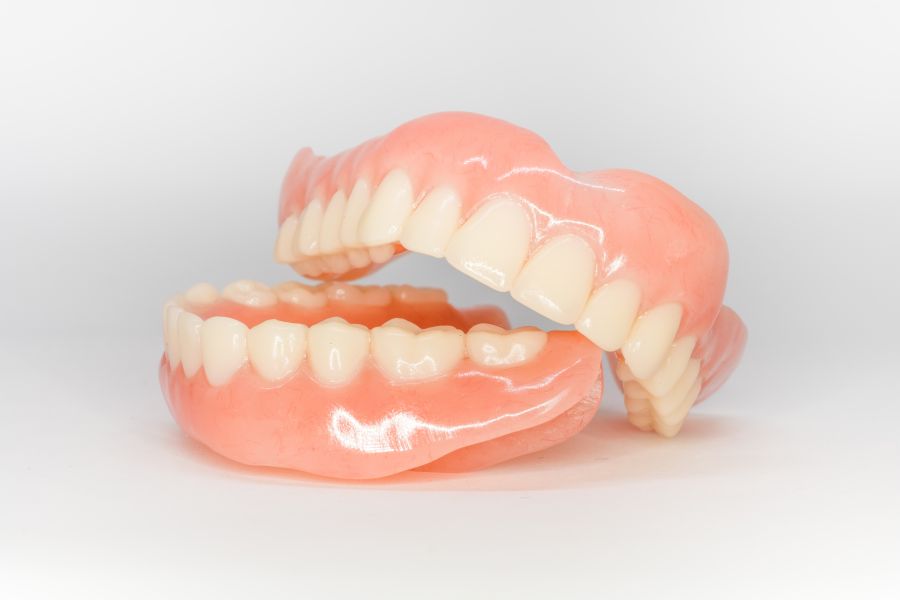
Mini implants are thin, one piece metal posts that are used to clip REMOVABLE dentures in place. These prosthetic teeth are not screwed in place like permanent teeth would be.
The mini implants will have rubber rings that help “clip the denture in place. They were originally introduced into the market and designed to help steady loose dentures and act as temporary implants (hold a denture in place while a graft heals).
Although mini implants can in some cases replace natural teeth — they are mainly used to help steady loose lower dentures.
People often choose them because:
- They are often cheaper than getting a lasting, permanent solution (but come with other costs)
- The surgery is smaller and is often done by a general dentist.
- They help stop dentures from sliding around especially in cases where patients have extreme bone loss and are not a candidate for standard full mouth dental implants.
The truth is, mini dental implants aren’t a permanent solution and still leave you in dentures. You’re just “snapping in” a denture instead of glueing it down. Here are some of the drawbacks of mini dental implants that patients don’t often realize:
- Since they are thinner and narrow, you will need more of these implants placed to be stable enough to support a denture (usually 8 -10 per arch!)
- The rubber inserts in the denture wear out over time. Think like the rubber on your tires! The inserts will cost money to have them replaced.
- The material of the teeth is acrylic with a denture on mini implants. The teeth will wear or break with time.
And the denture is likely to still bring the same problems:
- Sore spots on the gums from where dentures rub
- Food limitations due to reduced bite force
- Movement when speaking
- They may still need to be removed daily depending on what kind of denture you have.
Regular, full mouth dental implants: the permanent solution
Standard implants act like strong replacement tooth roots. They are wider and have interchangeable components. They give a solid base for permanent teeth — especially full mouth dental implants with zirconia sets that don’t come out.
They are designed for:
- Real chewing power
- Long-term strength and durability
- Protecting bone from shrinking
- Helping you avoid the health risks that come with missing teeth
- Screwed in place prosthetics. No rubber rings and not removable
- Strong enough to support stronger materials like titanium and zirconia
This is why regular implants are the gold standard — mini implants simply don’t do the same job.
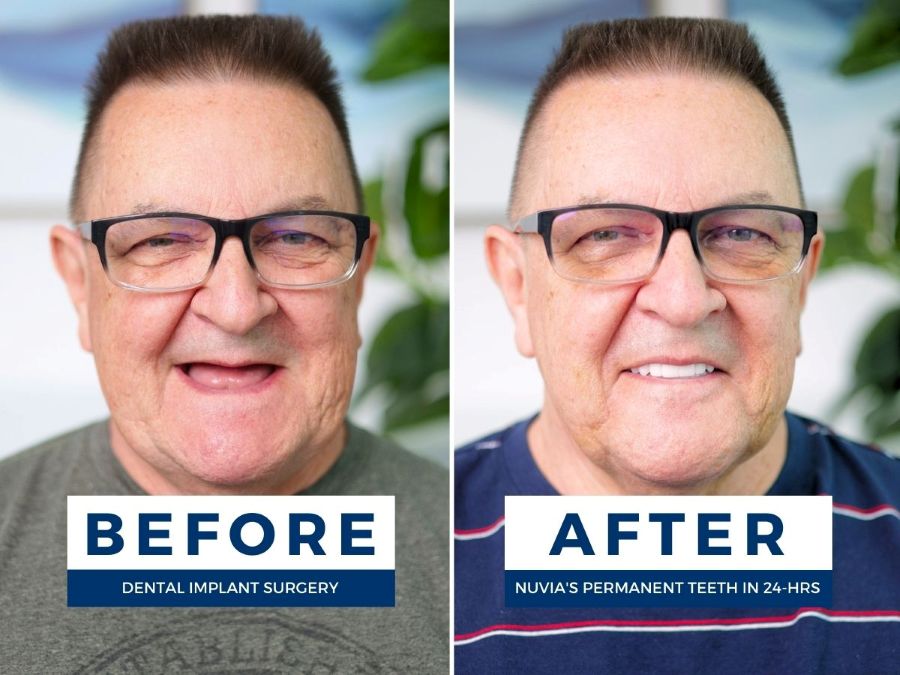
**Actual NUVIA patient(s) who may have been compensated for sharing their story. Not all those who come in for a consultation are eligible for this treatment. Results may vary in individual cases.
Permanent Teeth in 24 Hours: A Different Kind of Implant Experience
Many people think dental implants take a long time (and they definitely used to!). With traditional methods, you get plastic temporary teeth and then potentially way up to 10+ for the final ones. That long wait can feel uncomfortable and stressful.
Nuvia does things differently. Instead of giving you plastic temps, Nuvia creates your custom zirconia teeth in their own lab – overnight. These are strong, permanent teeth—not something you have to worry about breaking or cracking during healing.
The best part? You get them in about 24 hours. You go from failing or missing teeth to a brand-new (permanent) smile the very next day. No long delays. No removable dentures.
What if I’m not a candidate for full mouth dental implants?
Some people who have bone loss in their jaw are told they’re “not a candidate,” by other providers but later find out they actually are once they get a real second opinion from someone who does full mouth dental implants day in and day out.
This happens more often than you might think. Sometimes the first dentist you see doesn’t do full-mouth implant cases very often. Others may not offer advanced options like All-on-4® or zygomatic implants, or they rely on older tools and scans that limit what they’re able to do.
When you visit a center that performs full-mouth implant procedures every single day—like Nuvia—there are advanced tools, techniques, and procedures that could make it possible for a patient with bone loss to still get a new smile.
So even if you’ve been told “no” before, that doesn’t mean a permanent set of teeth is out of reach. With the right team and the right technology, many people discover they actually are candidates after all.
A second opinion can change everything.
Want to see if you may be a candidate for full mouth dental implants? Take the 60-second quiz here.
What are the costs of full mouth dental implants and other affordable options like mini dental implants?
When comparing costs, you need to look at more than just the price tag, but what you actually get for your money…and what you don’t.
The truth is, mini dental implants come with another cost — the cost of staying in dentures.
Even though mini implants may cost less than a standard dentist at first, they don’t give you:
- Permanent zirconia teeth
- Full chewing strength
- Stability and strength with a stronger implant foundation
- Long-term bone health protection
With full mouth dental implants, you get fixed zirconia teeth in 24 hours that don’t come out. That means:
- No dentures
- No re-linings, or frequent replacements
- No plastic or denture adhesives
- No slipping, gagging, or choking on your denture
- No nightly soaking
And no going back and forth to the dentist every time a denture part wears out. See the dental implant cost guide for more cost comparisons.
How much do mini dental implants cost?
Mini implants usually cost $500 to $1,500 each, depending on a few factors such as your dentist and the area you’re in.
Remember, that is just the initial cost.
Mini implants often also mean:
- Needing multiple implants just to hold one denture
- Getting denture replacements when the rubber rings wears out or breaks
- More appointments over time to take care of replacements and fixes.
And because they’re weaker and not built for long-term chewing force, mini dental implants could loosen or fail over time— which means more spending later.
So even though minis may cost less upfront…They can often cost more in the long run.
Should I look into mini dental implants or standard dental implants?
Mini implants can help in certain cases — especially when someone truly cannot get standard implants or needs help holding dentures in place.
But if your goal is:
- Real chewing power (and the ability to eat whatever you’d like)
- Permanent teeth that don’t come out
- A life without dentures
- A solution built to last a lifetime
Then you may want to find out if you could be a candidate for permanent teeth in 24 hours.
Take the 60-second quiz below




.jpg)
.jpg)
.jpg)