

.jpg)
If you’re dealing with missing or failing teeth, you’ve probably tried something to make it work or simply get by.
What doesn’t always get talked about is what happens when nothing really replaces what’s missing. Over time, it’s not just about appearance—it can start affecting how you eat, how your bite functions, and even how your mouth changes beneath the surface.
Many patients find themselves relying on temporary—or even makeshift—solutions while putting off a more permanent fix. If that sounds familiar, you’re not the only one who’s been there.
So we asked a simple question inside our SML MKR community of over 134k members:
“Before getting Nuvia’s Permanent Teeth (or if you’re still considering it), what solution were/are you using most recently?”
The answers weren’t surprising—but they were revealing. If you’ve ever wondered whether your situation is “bad enough” to do something permanent, this gives you a real look at what others in your position are actually doing—and what that can lead to if nothing changes.
The Most Common Fixes Patients Are Dealing With
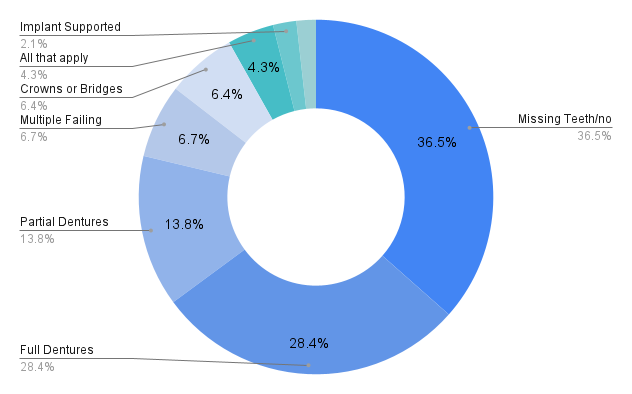
Here’s how people responded about what solution they’re using/have used:
- 36.52% - missing teeth with no current solution
- 28.37% - using full dentures
- 13.83% - using partial dentures
- 6.74% - dealing with multiple failing teeth or repeated root canals
- 6.38% - relying on crowns or bridges
- 4.26% - tried all of the options
- 2.13% - using implant-supported dentures (snap ins)
- 1.77% - something else
Each of these represents a different situation—but they all share one thing in common:
They aren’t permanent, and over time, they tend to create new challenges instead of fully solving the problem. The longer things stay the same, the more those challenges can build.
Missing Teeth: Living Without a Full Solution
The largest group—36.52%—said they’re living with missing teeth and no real replacement right now.
And if that’s you, you already know it’s not just about how things look. It shows up when you’re eating, when you’re talking, and even in the small decisions you make throughout the day. You might find yourself chewing on one side or avoiding certain foods altogether.
Over time, doing nothing can start to create bigger issues, like:
- further bone loss in the jaw
- shifting or weakening of surrounding teeth
- difficulty chewing and digesting food properly
- changes in facial structure or appearance
Not only can that impact your physical health, it can wear on you mentally over time.
What full mouth dental implants can do is remove that burden and solve each of the bigger issues that come from missing and failing teeth.
Because they replace both the tooth and the underlying structure, they help preserve bone, strengthen your bite, and restore your ability to chew normally again.
Instead of working around what’s missing, dental implants give you a strong, stable, and functional smile. You’re not thinking about where to chew or what to avoid. You’re just eating, talking, and going about your day like you used to.

Dentures: The Most Common Replacement That Can Take a Serious Toll
When you combine full and partial dentures, that’s over 42% of people relying on them right now.
And if you’ve ever worn dentures, you know it’s not as simple as “problem solved.” It can seem like there’s always something to manage. Making sure they stay in place when you eat, dealing with adhesives, noticing sore spots, or thinking twice about certain foods can be daily frustrations when wearing dentures.
Even when they fit well, they may not always feel like your teeth.
And over time, as your jaw naturally changes, they need adjustments just to keep up. That’s because dentures don’t replace the root of the tooth, which means the bone underneath can continue to shrink. As that happens, the fit changes, and the cycle of adjustments (and costs!) continues.
Full mouth dental implants solve this in a completely different way. Because they’re anchored into the jaw, they replace both the tooth and the root, which helps maintain bone structure and keeps everything stable.
There’s no shifting, no glue, and no taking them out at night. You can eat what you want without second-guessing it.
And they are designed to be a permanent solution to missing teeth. So no more endless cycle of relining and replacement costs.
It’s the difference between constantly managing your teeth… and feeling like they’re actually yours again.

Failing Teeth and Dental Work That Seems to Fail Long Term (Crowns, Bridges, Root Canals, etc)
About 13% of responses fall into this category when combined.
Like those patients with dentures, this group can easily get stuck in a cycle of “patchwork dentistry”. Something gets fixed, patched, or restored—but it doesn’t stay that way. A root canal here, a crown there, maybe a bridge to fill a gap. Then something else fails, and the process starts over again.
It’s not one big problem. It’s the same problem showing up in different ways over time.
One reason this happens is because treatment focuses on saving or restoring individual teeth, but they don’t always address what’s happening underneath. As more teeth weaken or fail, the cycle tends to continue and before you know it, costs could add up to be more than what a permanent, lasting solution would cost.
Full mouth dental implants take a different approach. Instead of trying to maintain teeth that are already breaking down, they replace the entire foundation with something stable and long-term.
They are permanent, functional, and beautiful. And despite what many people think about full mouth dental implants, they can actually be affordable with dental implant financing. It’s even possible that they save patients money in the long-run since they are a one-and-done solution.
What Are You Waiting For?
The data makes one thing clear. Whether people are choosing to settle with missing teeth (36.52%), dentures (over 42%), or ongoing dental work, they aren’t in a final solution—they’re in something they’re managing.
And when people wait, it’s usually not for a better version of the same solution. It’s waiting while:
- missing teeth could continue to affect eating and bone structure
- dentures could require more adjustments over time
- dental work may keep needing to be redone
Full mouth dental implants are a completely different experience.
With permanent teeth in 24 hours, you’re not starting a long process of temporary fixes and future upgrades. You’re starting with a complete solution designed to be final from day one.
If you’re ready to move past that, take the 60-second quiz to see if you may be a candidate for permanent teeth in 24 hours.




.jpg)