

.jpg)
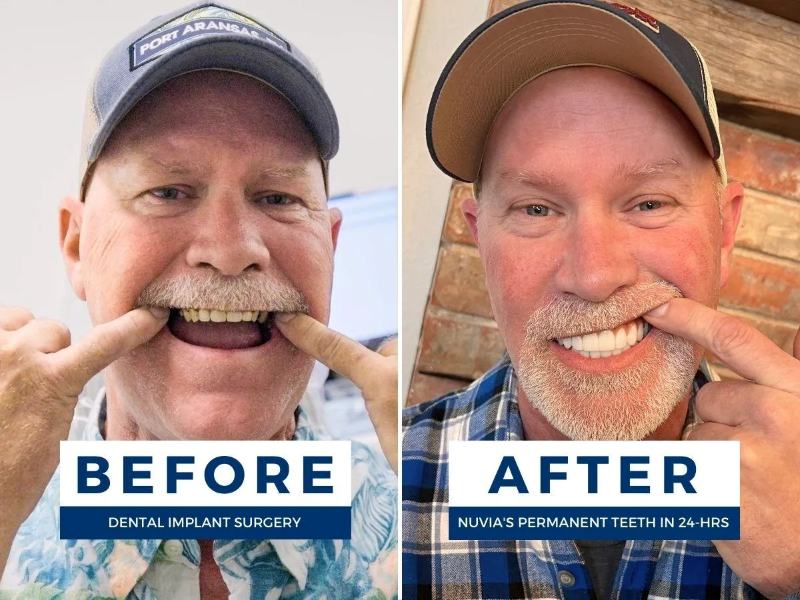
Rick is 65 years old. He's had cancer, diabetes, and a heart attack at 45. When he finally got full-mouth dental implants, his reaction wasn't relief that he'd somehow squeaked through. His biggest regret was that he'd waited so long.
"I had no idea that my teeth and the role that they played in my health," he said. "I could have fixed it if I would have done this quicker."
Rick's story gets at something most people in his position don't know: the medical conditions that make people afraid they won't qualify are often the same conditions that make fixing their teeth more urgent, not less.
If you've been putting off a consultation because you have diabetes, a heart condition, a history of cancer, or you're on medication for osteoporosis, this article is for you. We're going to go through the most common conditions people worry about, explain what they actually mean for candidacy, and be honest about the cases where things get more complicated.
The Most Dangerous Belief: “There’s No Hope”
About a third of people who reach out to Nuvia with medical questions aren't actually asking about their condition — they're asking for permission to disqualify themselves. The underlying belief is: something is wrong with me, so I'm probably out.
It's understandable. Years of being told by various providers that you're too complex, too high-risk, or not a good candidate can make you lose hope.
The more relevant question isn't do you have a medical condition — it’s whether that condition is currently controlled, and are you medically cleared for a surgical procedure? Those are different questions, and for most people with managed health conditions, the answers lead somewhere different than they expected.
The Health Of Your Mouth And Teeth Can Affect Your Overall Health And Well-Being
Here's what most people don't understand: neglected teeth are not just a cosmetic problem. They can affect your overall health and well-being.
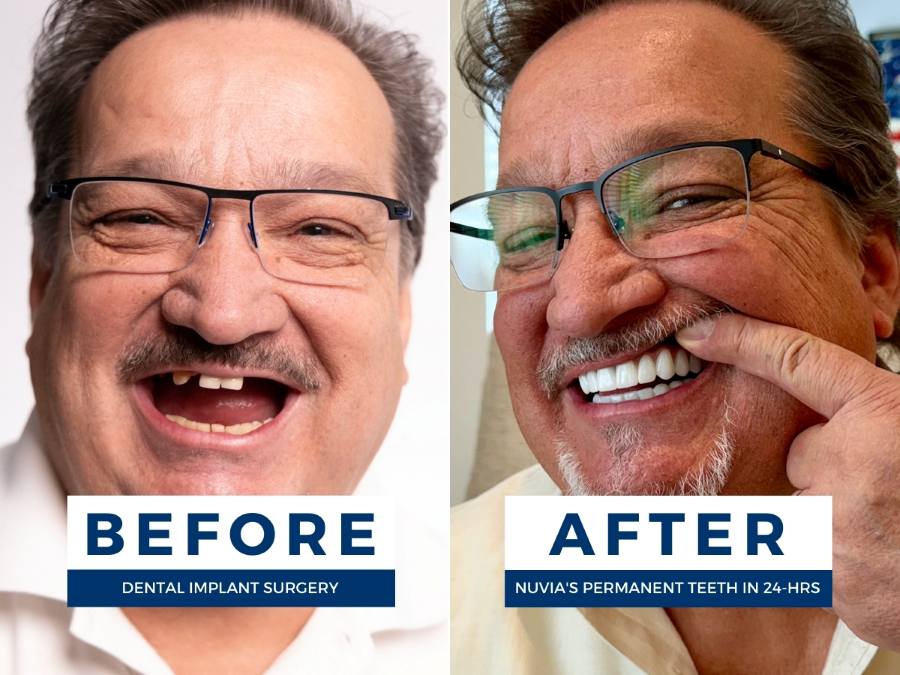
Ricky had full-mouth dental implants done about two years ago. Before surgery, he was sick constantly — waking up at night with reflux, seeing multiple doctors who couldn't explain what was going on. One finally asked him about his teeth.
"They taught me that your teeth, especially whenever they're in bad shape, they're always really infected," Ricky said. "They're releasing this stuff into your bloodstream constantly. And a buildup of that can cause you some horrible health issues."
He cited something his doctors told him: bad dental health is associated with an increase in heart issues. That comes from research on the connection between periodontal disease and cardiovascular disease — bacteria from infected gum tissue entering the bloodstream, contributing to arterial inflammation and other systemic effects.

Troy, a patient from the Fort Worth area who'd had serious heart issues in recent years, understood this connection before he came in.
"The real reason that I really needed this dental implant surgery done was for my health," Troy said. "I've had some issues with my heart in recent years, and I knew that my bad teeth were probably part of my heart issues."
This is the context worth holding onto as you read through the conditions below. For many patients, treating their teeth isn't something that competes with managing their health — it is part of managing their health.
Condition by condition: how it can affect candidacy
Diabetes
Diabetes is one of the most common, but also, the most manageable conditions people cite when they worry about whether they’re a candidate.
The concern with diabetes is real: elevated blood sugar impairs healing and increases infection risk after surgery. That's why the A1C level (a measure of average blood sugar over three months) matters.
Full-arch implants and prosthetics (implant supported teeth) can be routinely performed on patients with controlled diabetes. For patients with elevated A1C, Nuvia will typically require that number to come down before proceeding.
Tammy Johnson is diabetic and had a previous dental experience elsewhere that landed her in the hospital with sepsis. She came to Nuvia worried she wouldn't be a candidate at all.
"I am a diabetic, and so I was a little worried about, you know, are they going to be able to work with me because of my health situation?" she said.
"I did have a little bit of a delay. I had to get my A1C down in order to have my procedure done. But looking back at that, I'm so thankful — because Nuvia's first concern was making sure that I had my full medical clearance, that everything was good so I didn't go through the past experience I had already been through."
Two weeks out from surgery, Tammy describes minimal pain, no significant bruising, and confidence she hadn't felt in years. Her diabetes didn't disqualify her. It just shaped the process of getting medically cleared.
→ For a deeper look: Can You Get Dental Implants With Diabetes?

Heart conditions
Heart conditions are another area where patients are concerned about their candidacy. What matters the most is cardiovascular stability, receiving clearance from your cardiologist, and appropriate precautions during surgery. Treatment at Nuvia includes a dedicated anesthesiologist monitoring you throughout the procedure, which allows the surgeon to focus 100% of his attention on surgery.
Troy came in aware that his dental health and his heart health were connected. For him, the surgery wasn't a risk he was taking despite his heart — it was a step toward protecting it.
"I got all that taken care of," he said. "I don't have to worry about health problems from my teeth anymore."
Blood thinners
Managing blood thinners, such as warfarin (Coumadin), apixaban (Eliquis), rivaroxaban (Xarelto), before surgery requires coordination with the prescribing physician.
This is a standard surgical consideration to ensure the patient’s safety. Every patient’s medical history is unique and, thus, it is important that we collaborate with the primary care physician and/or cardiologist.
Cancer history
There's an important distinction here: a history of cancer that has been successfully treated is very different from active cancer or ongoing treatment.
Rick has been through cancer. He's also had diabetes and a heart attack at 45. He qualified.
The conditions that create real surgical risk are active chemotherapy (which suppresses the immune system and impairs healing) and radiation treatment to the head or neck.
Radiation to the jaw area specifically can affect bone quality and blood supply in ways that require careful assessment before placing implants. The timing post-treatment matters significantly, and patients who've had head or neck radiation should discuss their history in detail during their consultation.
For patients whose cancer was treated elsewhere on the body and is in remission, the picture is often much more straightforward. Clearance from the oncologist is part of the evaluation, but it's rarely the end of the conversation.
Osteoporosis medications — Prolia, bisphosphonates, and MRONJ
This is the one area where we'll give you a more complicated answer.
Medications used to treat osteoporosis — including oral bisphosphonates like Fosamax, Boniva, and Actonel, and the injectable denosumab (Prolia) — are associated with a condition called MRONJ: medication-related osteonecrosis of the jaw. MRONJ is a rare but serious condition where jaw bone tissue doesn't heal properly after dental surgery.
The risk profile varies significantly depending on the type of medication and how it's administered:
- Oral bisphosphonates (taken by mouth for osteoporosis): The risk of MRONJ is real but low — estimated at less than 0.1% in most studies. Many patients on these medications can still receive implants, with careful assessment and sometimes a supervised medication pause before and after surgery in coordination with the prescribing physician.
- IV bisphosphonates (administered by IV, typically for cancer-related bone disease): The risk is substantially higher. Patients on IV bisphosphonate therapy are generally considered poor candidates for implants, and this is a conversation that requires close coordination between the implant provider and the oncology team.
- Prolia (denosumab): Risk profile is generally considered similar to oral bisphosphonates, though it is a different class of drug and each case is evaluated individually.
If you're on any of these medications, you're not automatically disqualified — but this is one where the individual assessment genuinely matters more than a blanket answer. Bring your complete medication history and dosage to your consultation.
Metal allergy
Most people who worry about a metal allergy are thinking about nickel or cobalt reactions — the kind you might notice from jewelry or metal belt buckles. Titanium is a different category of metal entirely. True titanium allergy is rare, estimated at well under 1% of the population.
For patients with a confirmed or suspected titanium allergy, zirconia (ceramic) implants are an established alternative that functions similarly. A MELISA test or patch test can confirm whether titanium sensitivity is actually present before any decisions are made.
Organ transplant
Patients who've had organ transplants are on long-term immunosuppressant medications, which means a higher risk of post-surgical infection and slower healing. That's a legitimate consideration — but it's not a disqualifier for patients whose transplant is stable.
Timing matters. Patients who are newly transplanted (within roughly the first six to twelve months) are typically advised to wait for stability before elective surgery. For patients who are years out from transplant, functioning well, and have clearance from their transplant team, full-mouth implants are often achievable with appropriate precautions.
Bone loss and thin jawbone
This one is worth addressing directly because Rick specifically worried about it — and he was right to.
"I was ready to do it and then I was told there may be a chance they can't do it because I'm sixty-five and I might not have enough bone in my mouth to do it," Rick said. "I was praying in that chair."
Bone loss in the jaw happens naturally after teeth are lost or extracted — the bone that once anchored your teeth gradually resorbs without something to support. The longer teeth have been missing, the more significant the loss tends to be.
Bone grafting can address mild to moderate bone loss and create the foundation needed for implants. But there are limits. In cases of severe bone loss, the structural support needed for implants may not be achievable even with grafting — which is why Rick's point about timing matters. Waiting doesn't make it easier. It makes it harder, or eventually impossible.
Rick had enough bone. He got his implants. His message: don't give the clock more time to work against you.
What actually can disqualify someone
These are the factors that genuinely make candidacy more difficult or impossible:
- Uncontrolled systemic conditions — diabetes with very high A1C, uncontrolled hypertension, or other conditions that haven't been medically managed create real surgical and healing risk. The path forward is usually controlling the condition, then proceeding.
- Active cancer treatment — chemotherapy and radiation, particularly to the jaw and neck, typically require waiting until treatment is complete and the body has had time to recover.
- IV bisphosphonate therapy — as described above, this carries substantially higher risk of osteonecrosis than oral medications.
- Insufficient bone that cannot be augmented — in some cases, bone loss is extensive enough that implants cannot be safely anchored. This is assessed through imaging at the consultation.
- Active systemic infection — existing systemic infections may need to be resolved before implant surgery but it’s common to remove teeth and place implants on patients with active periodontal disease as a way of treating the condition.
Find out if you may be a Candidate
A blog post — including this one — can tell you how conditions tend to affect candidacy in general. It cannot tell you whether you qualify.
Candidacy for full-mouth dental implants is determined through imaging of your jaw, a review of your full medical and dental history, and a direct conversation about your current health status.
Nuvia looks at the whole picture: what conditions you have, how controlled they are, what your bone structure looks like, and whether medical clearance from your other providers is warranted.
What it doesn't require is that you be perfectly healthy. Rick wasn’t. Tammy wasn’t. Troy wasn’t. Ricky wasn’t. They all got their teeth.
If you have a condition and you've been assuming the answer is no, the most useful thing you can do is ask for real. Nuvia offers a free, no-pressure consultation — and if you want a sense of where you stand before you schedule, the 60-second quiz below is a good place to start.
Take the 60-second quiz to see if you may be a candidate →




.jpg)