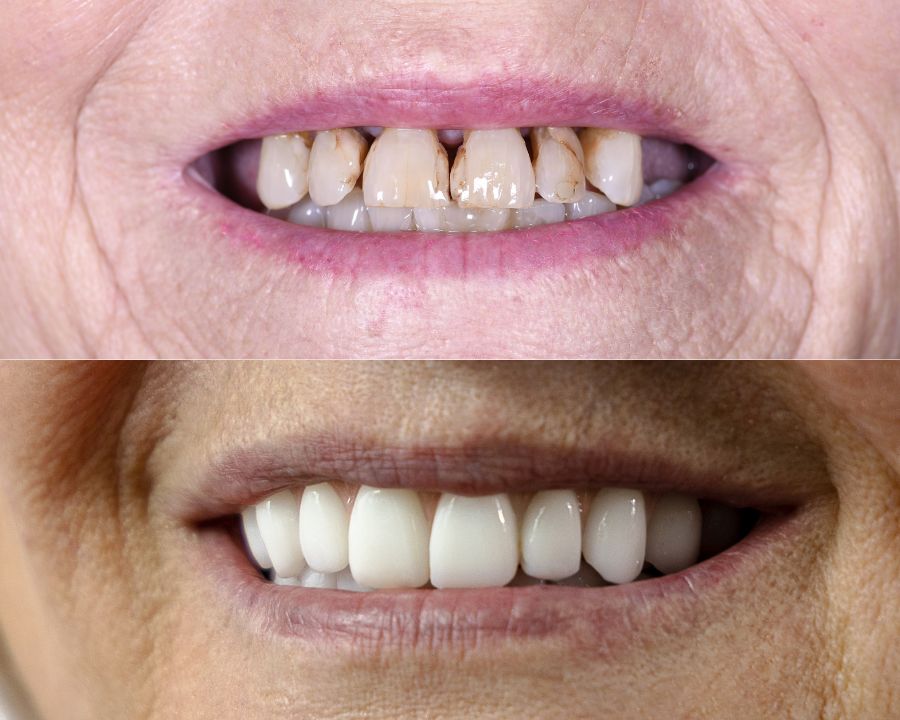

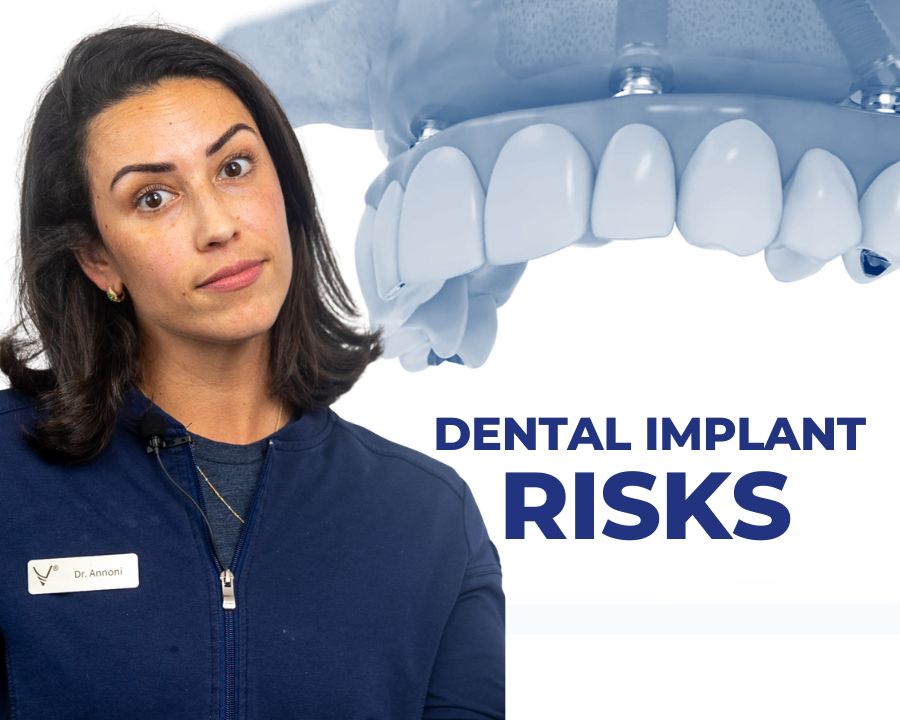
Dental implants are one of the most successful procedures in modern dentistry. In healthy patients, long-term success rates are typically reported between 95–98%. At Nuvia, this number is {{success_rate}}.
But that doesn’t mean they’re risk-free.
Like any surgical procedure, complications can occur. The difference between a smooth recovery and a difficult one often comes down to planning, technique, and provider experience.
As someone who works with dental implant patients every day, I believe patients deserve transparency. If you’re considering implants, here’s what you should know.
Why Do Dental Implant Complications Happen?
There are three factors that can determine the quality and safety of a dental implant procedure: the material used, the technique used, and the expertise of the provider placing the implant.
Patients are often surprised to learn that legally placing dental implants does not require years of specialized surgical training. While many providers do pursue extensive education, technically it may only take limited additional coursework to begin placing implants (a general dentist taking a weekend course for example).
That doesn’t mean implants are unsafe. But it does mean experience varies — and that variation directly affects risk.
Placing a single implant in a healthy patient with strong bone is very different from rebuilding an entire arch where bone has deteriorated (this is often the case for patients who have had missing teeth for years).
Some full-arch cases are straightforward. Others become highly complex, especially when there is limited bone available.
That’s where experience makes a significant difference.
The Most Common Dental Implant Risks
Infection (Peri-Implantitis)
Peri-implantitis is an infection around the implant that can lead to bone loss if untreated.
Infection risk increases in patients who smoke, have uncontrolled diabetes, or do not maintain proper oral hygiene. When detected early, it can often be managed successfully.
Nerve Injury
Nerve complications are uncommon but can occur when implants are placed too close to the inferior alveolar nerve in the lower jaw.
Symptoms may include numbness, tingling, or altered sensation in the lips, chin, or tongue.
This risk is dramatically reduced with proper 3D CBCT imaging, digital planning, and seeing an experienced provider who does dental implant procedures day in and day out. Modern imaging technology allows us to visualize nerve positioning with precision before surgery even begins.
Sinus Complications (Upper Jaw)
In the upper jaw, implants placed in areas with insufficient bone may extend into the sinus cavity. This can result in sinus pressure, chronic sinusitis, or infection.
However, advanced techniques such as sinus lifts, zygomatic implants (anchored in the cheekbone), or pterygoid implants (anchored in dense posterior bone) allow experienced surgeons to safely work around these anatomical challenges.
Many patients are told they “don’t have enough bone.” In some cases, what they actually need is a provider who is comfortable with more advanced solutions.
Implant Failure (Failure to Integrate)
For a dental implant to succeed, it must fuse with the surrounding bone.
Failure can occur early — within the first few months — or later due to bone loss or mechanical stress.
The most well-documented risk factors include smoking, uncontrolled diabetes, severe bone loss, bruxism (teeth grinding), and poor surgical planning.
While the risk of dental implant failure is relatively low (2-5% as reported in large studies), it is even lower at Nuvia with internal tracking reporting a less than 1% failure rate.
Who Is Most at Risk?
Not all patients carry the same level of risk. Below is a simplified comparison:
It’s important to understand that having one of these risk factors does not automatically disqualify you from treatment. It simply means your case requires thoughtful planning and careful execution.
The Risk Patients Rarely Consider: Provider Experience
One of the biggest factors that determines outcome isn’t discussed enough — and that’s how often your provider performs the specific procedure you need.
Some patients only need a single implant. Many general dentists are able to handle these successfully.
But full-arch restorations, especially in patients with limited bone, require a completely different level of surgical planning. Advanced solutions like zygomatic or pterygoid implants are not routinely performed by every provider.
When a surgeon performs complex implant cases day in and day out, they are most likely better prepared for challenges and unexpected findings during surgery.
Experience doesn’t eliminate risk entirely but it can reduce it.
How Patients Can Reduce Their Risk
There are practical steps every patient should take before moving forward:
- Ensure 3D CBCT imaging is part of your evaluation (It will be at Nuvia).
- Ask how many similar cases your provider performs each month. At Nuvia, full mouth dental implants are done day in and day out.
- Understand whether bone grafting or additional procedures are included in your plan. At Nuvia, each part of the procedure, is clearly communicated to you
- Follow all post-op care, hygiene and follow-up recommendations.
- If you smoke, consider quitting before surgery to significantly improve success rates. Because of the link between smoking and dental implant failure, it could potentially be difficult to find a provider willing to place implants for a patient who habitually smokes.
Dental implants are a significant investment — not just financially, but medically. Taking the time to evaluate your provider and your own health factors is one of the best forms of protection.
When to Seek Immediate Attention
Most implant procedures heal smoothly. However, you should contact your provider promptly if you experience:
- Persistent or worsening swelling after several days
- Fever
- Increasing pain rather than gradual improvement
- Prolonged numbness
- Implant mobility
Early intervention can often prevent minor issues from becoming major complications.
Are Dental Implants Worth the Risk?
Every surgical procedure carries risk. But so does doing nothing.
Chronic dental infections, failing teeth, repeated root canals, unstable dentures, and progressive bone loss all affect both oral and systemic health.
The longer missing or failing teeth are left untreated, the more bone loss can occur — and the more complex treatment may become.
If you’re even considering dental implants, the next step is simple:
Take the 60-second quiz to see if you may qualify for permanent teeth in just 24 hours.
When properly evaluated and placed, dental implants are one of the most predictable and long-lasting solutions in dentistry.
The key is not whether implants have risks — they do. The key is whether those risks are properly managed.
An informed patient is a protected patient.




.jpg)

.jpg)